Nam Prik Pao (Thai Chili Paste)

Published Feb 17, 2011•Updated Feb 22, 2024
This post may contain affiliate links. Please read our disclosure policy.
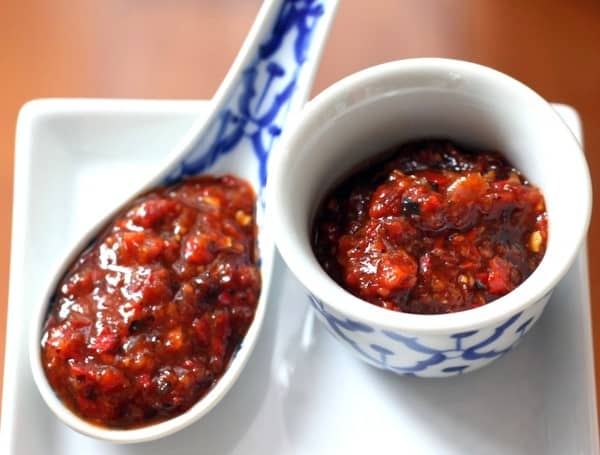
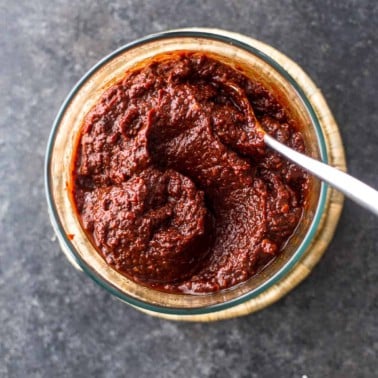
Nam Prik Pao (thai chili paste) is a common ingredient used in Thai cooking. It is spicy and sweet, with rich flavors of roasted vegetables and is often enriched with shrimp. I’ve used it in recipes on this site, and it is so common that you might be able to easily find in a jar outside of Thailand.
I have been on the hunt for a recipe for nam prik pao that doesn’t require 7 hours of commitment but still offers all the flavor. Most recipes I found on the internet gave me a headache. One recipe actually required that you place all of the ingredients outside in the sun for several days to allow them to dry. (In Bangkok I suspect that this activity may lead to dried peppers that taste a bit like car exhaust fumes.)
Earlier this week I made a version from a Thai cookbook and it produced something much closer to the Red Pepper Jelly I make at Christmas – sweet with a hint of spice but none of the deep layers of flavor that come from roasting the vegetables first for an authentic-tasting nam prik pao.
I nearly came to the conclusion that I should stick with the stuff in a jar and give up on ever being able to produce my own. But what kind of foodie blogger would I be if I didn’t try to tackle at least one or two ridiculous food endeavors and share them here. It also helped that finally I entered into this endeavor knowing that I would gladly sacrifice the pride of making nam prik pao the way it was made in this country 200 years ago, if it produced a recipe that I could (and would) actually make again.
Certainly there are people out there who are experts in authentic Thai cooking and can tell you all 76 steps that a Thai grandmother would take to make this stuff at home. What follows is not that sort of recipe, but this absolutely produces a flavorful, and very close approximation, of the nam prik pao I taste frequently here in Thailand.
My first step was a little taste test of just a few of the hundreds of Thai Chili Pastes available on the market at my local grocery store in Bangkok. There is an entire section of the grocery store dedicated to this product, so there’s no shortage of options to try.
They vary quite a bit in taste, but I found that my favorite version (even when tasted amidst these other options) is the one on the middle right below, by Mae Praenom. It may just be that this suits my western palate because it is the least “fishy” of the options and the sweetest tasting.
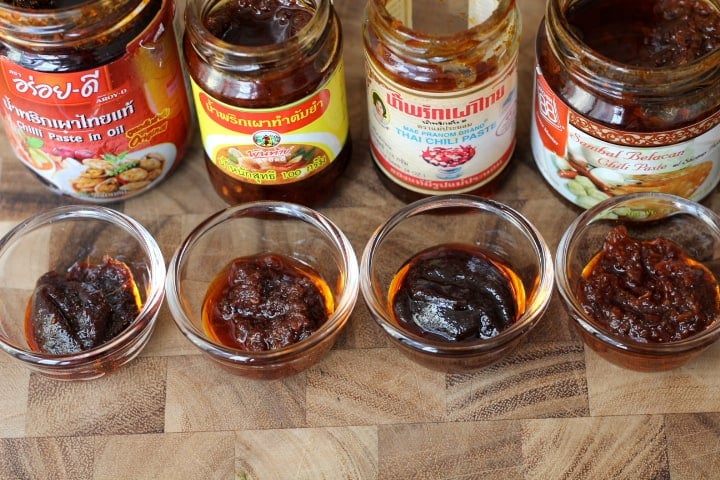
These versions in the jar actually have very few ingredients. Primarily the ingredients are red chilis, onions, garlic, sugar, vinegar, oil and shrimp or shrimp paste. Using this as a guide, and with the knowledge that part of the richness in flavor of the paste comes from the roasting (or sometimes frying) of the ingredients, I set to work.
After several attempts, it became clear that I prefer to make nam prik pao vegetarian style, getting a savory element from mushrooms rather than ground shrimp. I tend to like the shrimp flavor, but found that in the following recipe, I preferred a non-fishy flavor.
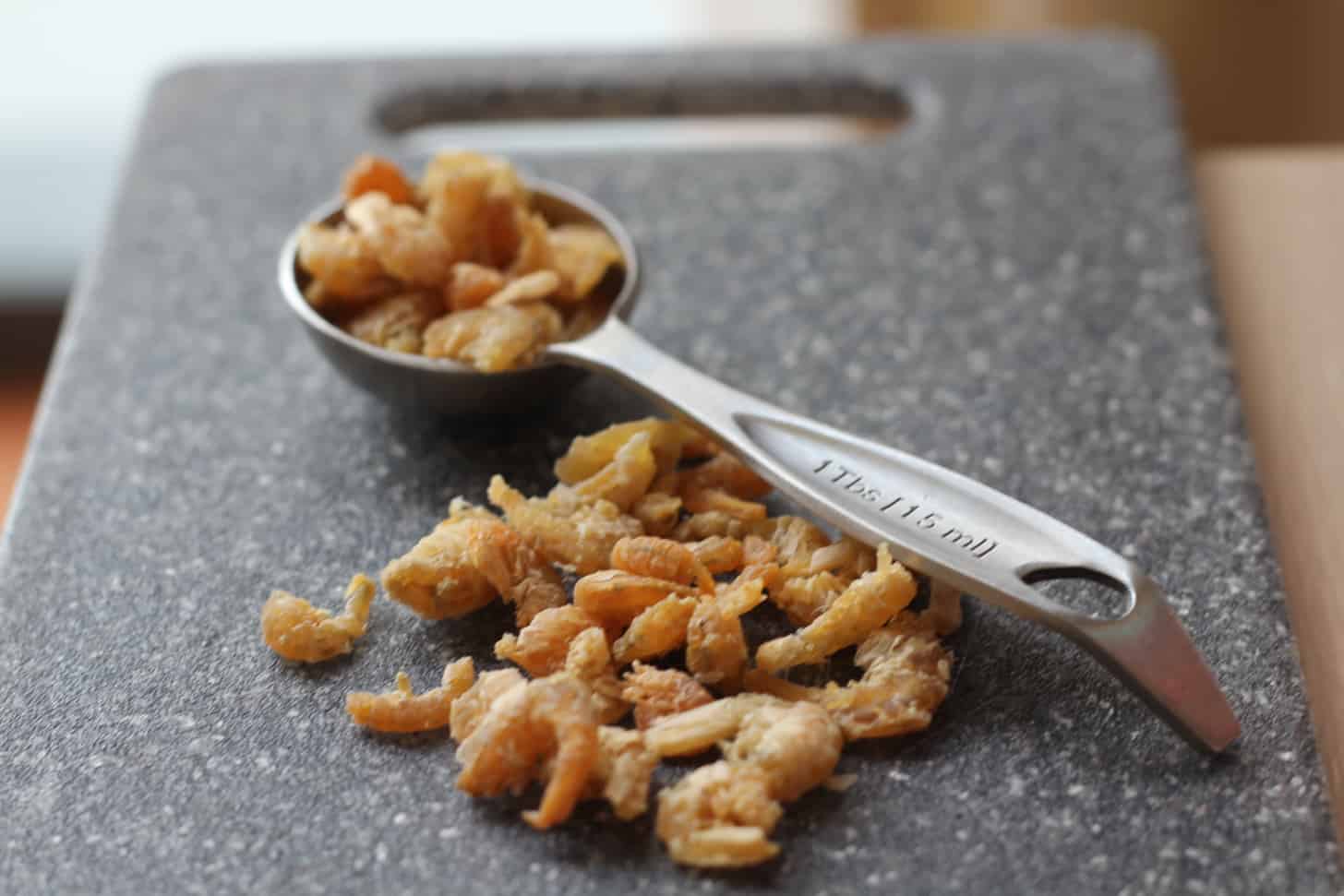
If you prefer to use shrimp, simply substitute 2 tablespoons of dried shrimp for the mushrooms. Dried shrimp are shown below.
After all the effort and a few terrible batches, the recipe that follows met all of my expectations, and was easier to execute than any of the recipes I could find elsewhere. I actually liked the finished homemade paste much more than the kind I’ve been buying in a jar, although there will certainly be times that the convenience of the jar will win out.
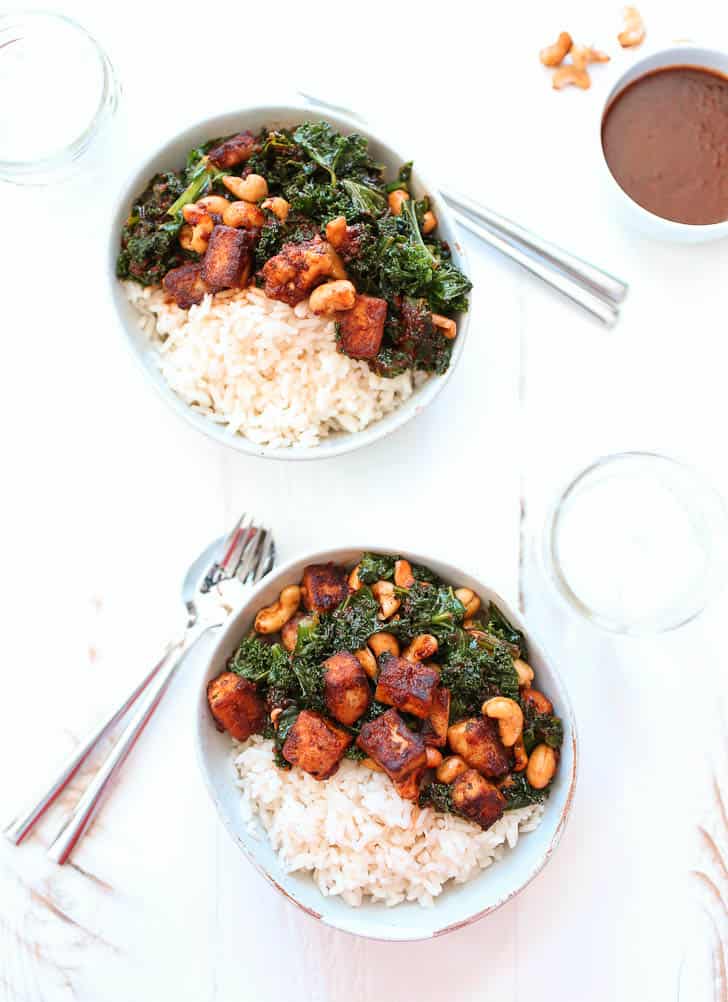
And if you’re looking for something to make with this super flavorful paste, try our totally addictive, 20-minute, vegan Crispy Tofu with Thai Chili Paste, Cashews and Kale.
More Homemade Thai Sauce Recipes

Pin this now to save it for later
Pin It Now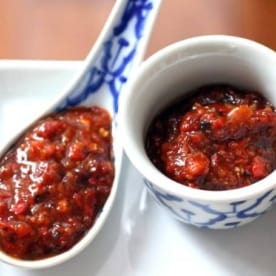
Nam Prik Pao (Thai Chili Paste)
Equipment
- Half Sheet Pan
- Knife
- Cutting Board
- Food Processor
Ingredients
- 13 large red Thai chilis, separated (10 will be roasted, 3 will be used raw)
- 6 cloves garlic
- 1/2 large onion (peeled and cut into quarters)
- 2 large dried shiitake mushrooms
- 1/2 cup light brown sugar
- 1/4 cup water
- 1/4 cup tamarind paste (available in the international section of many grocery stores or any Asian market; if you cannot find this, you can omit this ingredient altogether as the vinegar below will still impart a different, but still delicious paste)
- 1/4 cup distilled white vinegar
Instructions
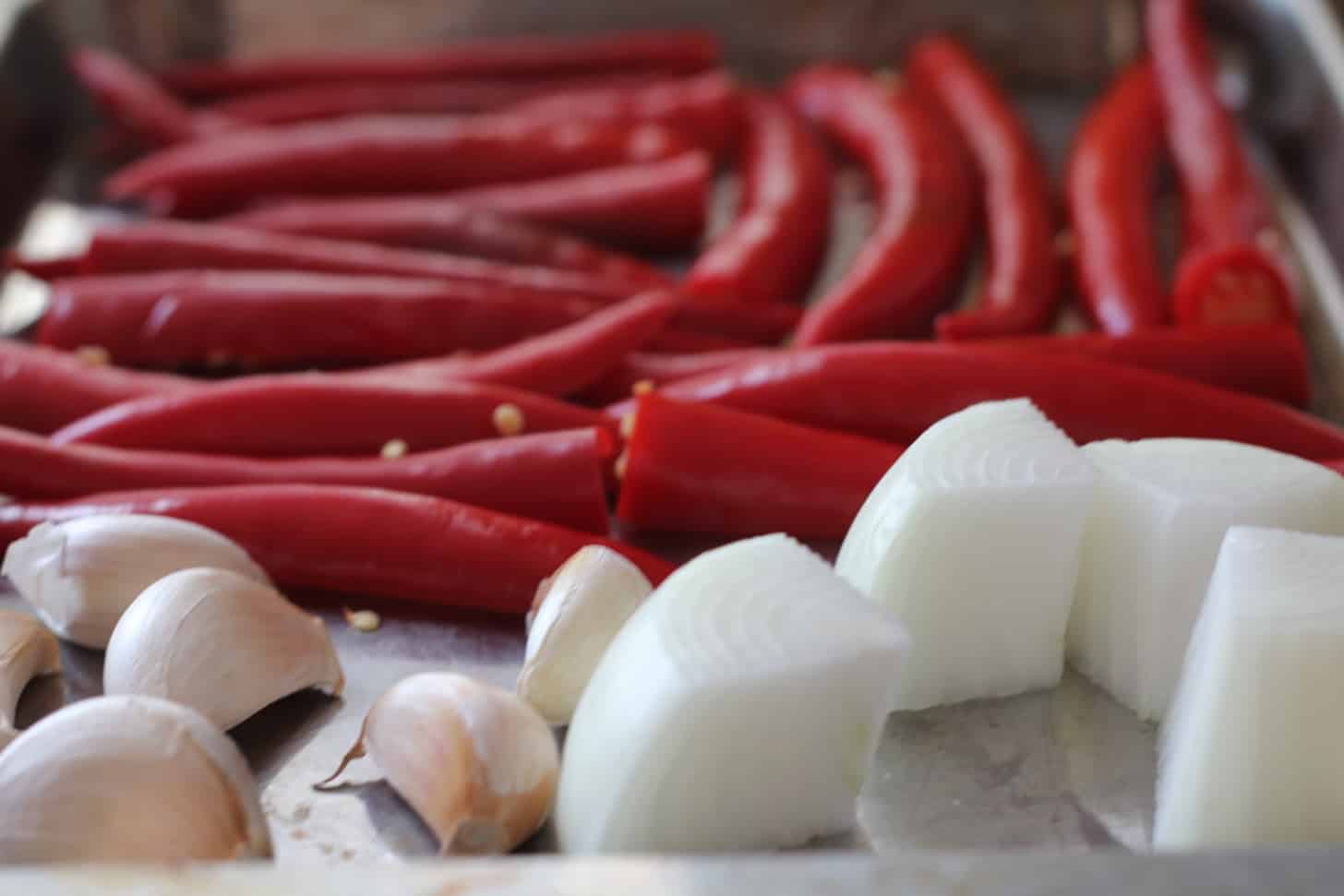
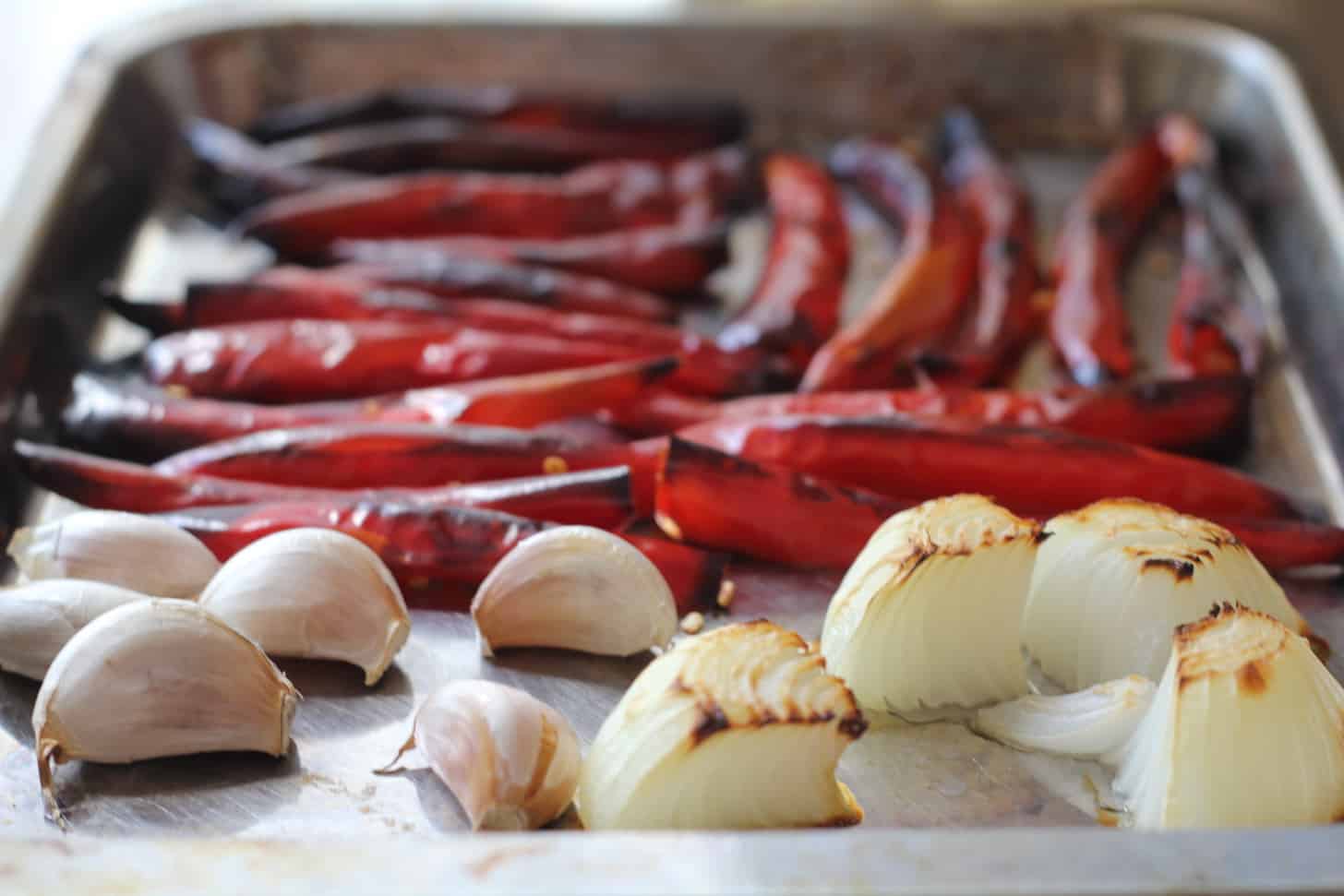
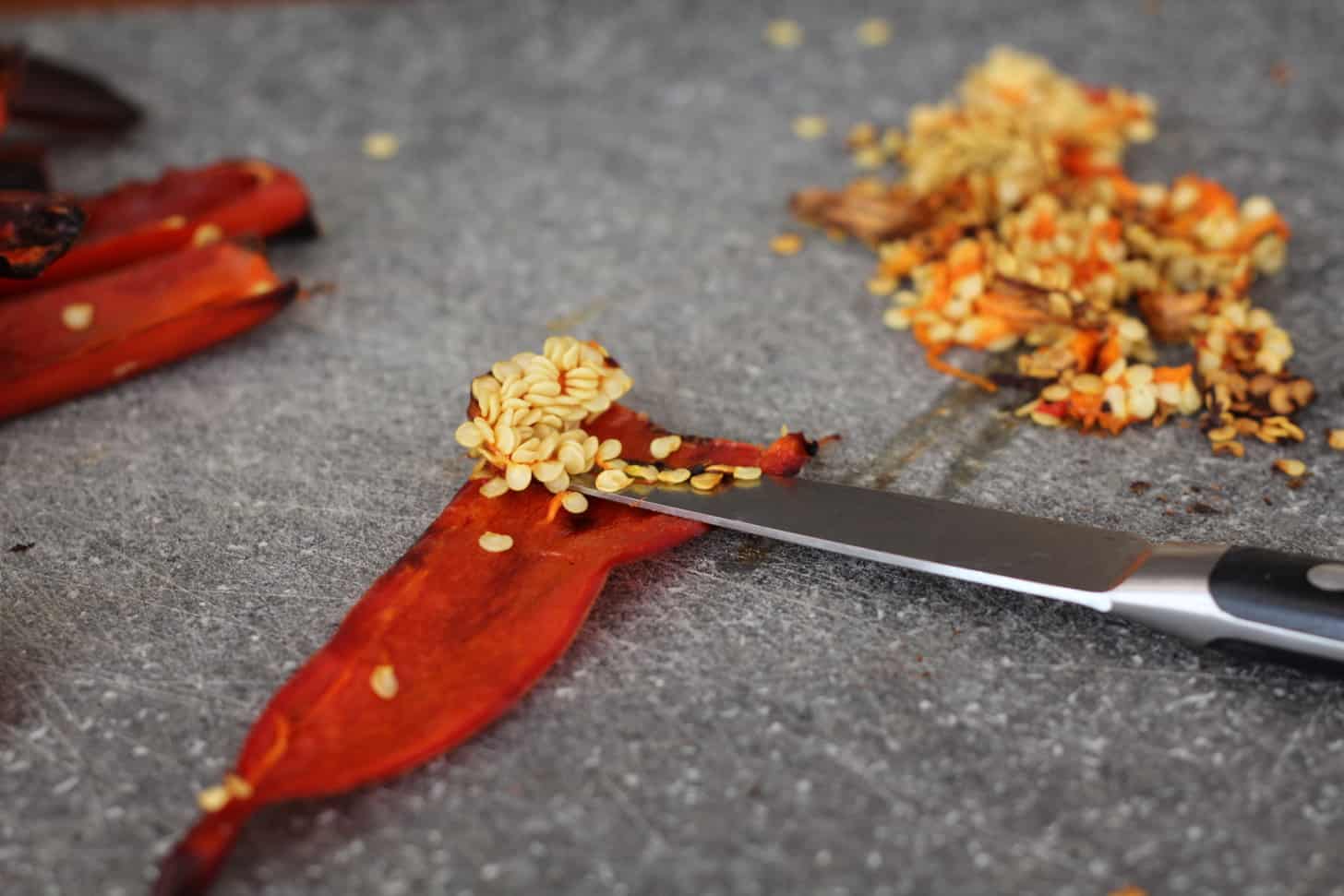
- Preheat the oven to 400 degrees. Slice 10 of the red chilis in half and place them face down on a baking sheet. Place garlic cloves and onion on the baking sheet, insuring that none of the vegetables are overlapping. Bake, without stirring, until chilis begin to blacken in spots, about 40 minutes (note: watch them closely and remove if they start to blacken earlier than the recommended timeframe; some reviewers have noted that their aromatics began to blacken after 10 to 15 minutes). Remove from the oven and allow to cool to room temperature.
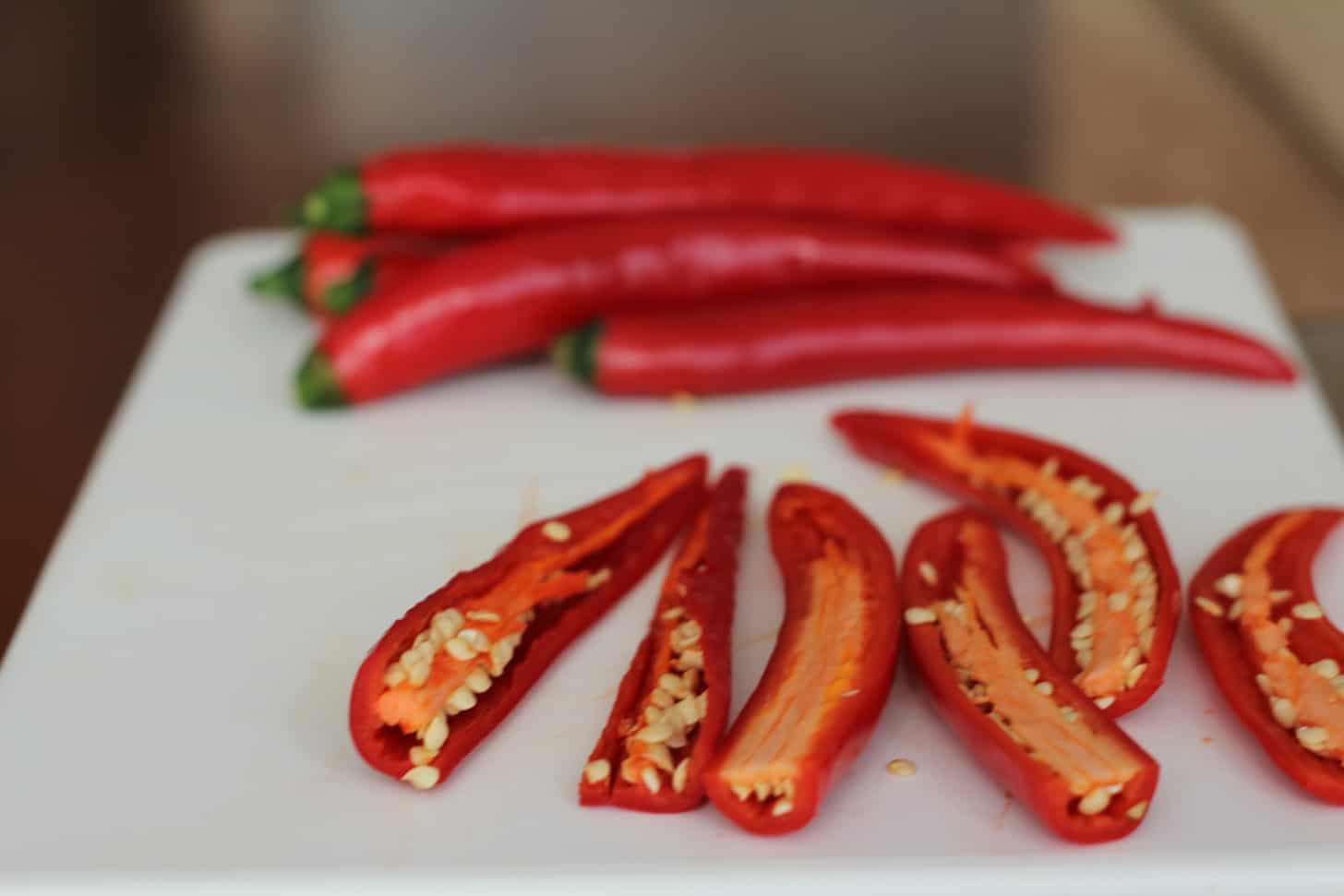
- Cut the 3 remaining chilis in half lengthwise. Gently remove the seeds and membranes from both the roasted and raw chilies (see note below). Gently squeeze the garlic cloves to extract the roasted garlic, and discard the peels.
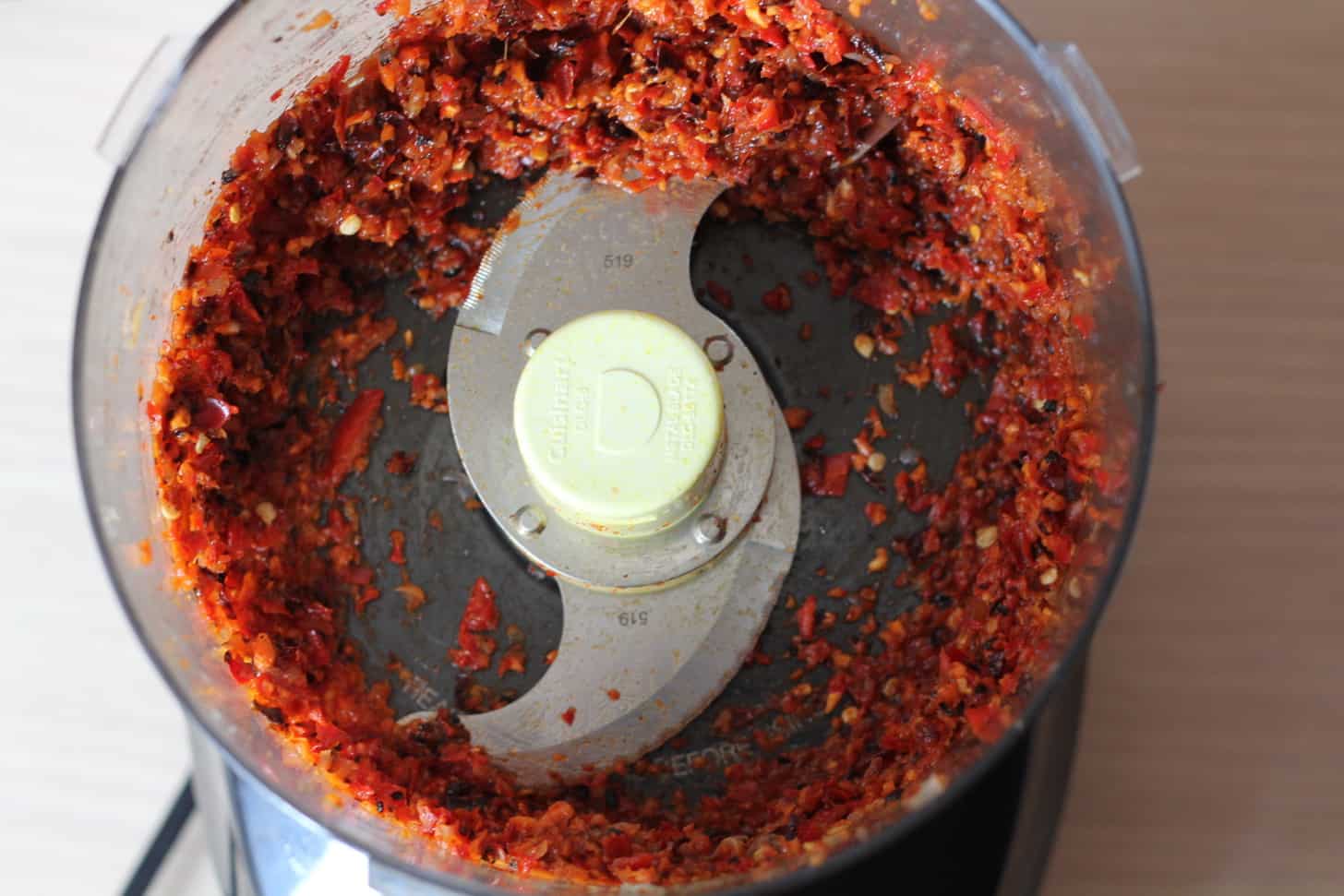
- Put garlic, chilis, onions and mushrooms in the bowl of a food processor. Pulse until the mixture is finely and evenly chopped. (It will be nearly smooth and ground to a paste in some spots.)
- Place the chopped vegetables, sugar, water, tamarind paste and vinegar in a small pot over medium heat. If the mixture appears quite dry, add a splash more water so that it can easily come to a simmer.
- Simmer, stirring frequently (reduce the heat if it begins to boil), until the mixture becomes smooth and thick, about 10 minutes. Remove from heat and allow to cool.
- Store in the refrigerator for up to 2 weeks.
Notes
Nutrition
Nutrition information is automatically calculated, so should only be used as an approximation.













Wondering if you think this recipe is a good substitute for the following…which is my favorite menu item at my favorite Thai restaurant.
Med Ma-Mueng Prik Pow
(Roasted hot pepper sauce with onions, peanuts, and cashews)
Yes! This is the paste you need for that dish!
I also make a variation on that dish without the Thai Chili Paste – it’s a bit simpler. You can find it here – https://inquiringchef.com/thai-cashew-chicken/
Hi, thanks for the recipes. I was wondering if you had any thoughts or advice for canning or preserving large quantities of this sauce for long term? I have a large family of growing boys who love the “Thai chicken and rice” meal. But with this family there’s not time to make sauces each time. I would love to make a huge batch every few months, or even once a year.
I love that your boys love that meal! I have made larger batches of Nam Prik Pao, but find that I need to blend and cook it in rounds. After it’s done, I actually always just opt to freeze it. I’ve never pressure or hot water canned the sauce (though I’m sure it would work). I find that it keeps for at least a year in the freezer and I love that I can freeze it in just the amount I need. I’ve used ice cube trays and 4-oz mason jars to store smaller amounts so they are just ready to use when I need them.
This recipe really did the trick and we concocted something very close to the real thing! Thank you for demystefying the whole process, and we will endeavour to find out what other goodies are on offer on the website. Hop hun map!
Are you guys still monitoring this Blog? If so, because you lived in Thailand, I have a recipe question. A restaurant named Sawadee serves a stir fried vegetable dish with the meat of your choice. The sauce is absolutely delicious. Any idea what this sauce may be?
I can’t be sure, Mark, but I can be almost certain that it has oyster sauce in it. Some of the very best stir-fry vegetable and / or meat dishes in Thailand are made with some amount of oyster sauce (usually mixed with soy sauce and maybe some sugar and / or spice).
I’m wondering if I could use fish sauce instead of dried shrimp?
Oh for sure – I actually think that’s a great idea. I’d suggest playing around with the amount a bit though, since the fish sauce is liquid, too much could water down the nam prik pao. I just made this recipe again this week though, and it’s quite thick, so a tsp or two of fish sauce shouldn’t change the consistency all that much and will definitely give it that nice flavor!